
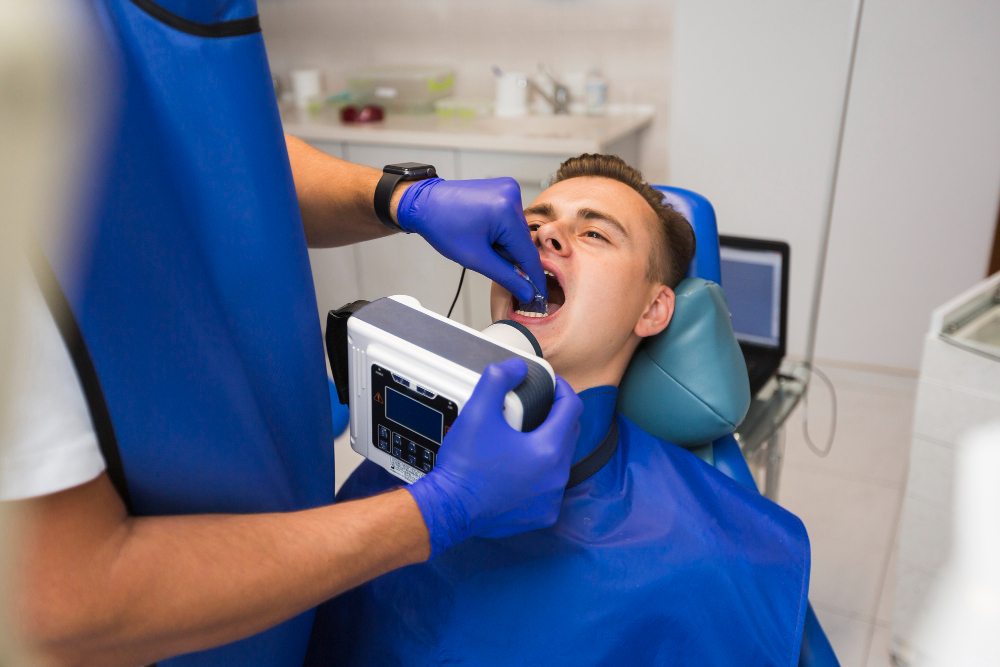
What Is an Intraoral Scanner?
Intraoral scanners are a type of modern dental technology. Dentists use them to create digital dental impressions of your teeth and gums. Instead of using messy molds, the scanner takes quick, detailed pictures inside your mouth. As a result, the process is faster and more comfortable for patients. Intraoral scanners in dentistry are changing how dental care is delivered.
Key Benefits of Intraoral Scanners in Dentistry
There are many reasons why dentists are choosing intraoral scanners. Not only do they make dental visits easier, but they also improve results. Here are some key benefits:
How Intraoral Scanners Work
First, the dentist gently moves a small wand inside your mouth. This wand has a tiny camera that takes thousands of pictures in seconds. Next, the scanner combines these images to make a 3D model of your teeth. Because the process is digital, dentists can see the results right away. This means fewer errors and less waiting for you.
Common Uses in Dental Practice
Intraoral scanners are helpful in many dental treatments. For example, they are often used for:
Because digital dental impressions are so precise, dentists can offer better care in less time.
Patient Experience and Comfort
Many people worry about dental visits. However, intraoral scanners make the experience much easier. There is no need to bite down on trays filled with sticky material. Instead, the scanner is quick and gentle. Most patients say they feel less anxious and more comfortable during the process. As a result, patient comfort in dentistry has greatly improved.
Comparing Intraoral Scanners to Traditional Methods
Traditional dental impressions use trays and putty to make a mold of your teeth. This can be messy and uncomfortable. In contrast, intraoral scanners are clean and fast. Here are some differences:
Because of these advantages, more dentists are switching to digital dental impressions.
Future of Intraoral Scanning in Dentistry
Dental technology is always improving. Intraoral scanners are becoming even faster and more accurate. Soon, they may help with more treatments, such as early cavity detection. According to dental journals, digital tools like these will shape the future of dental care. As a result, patients can expect even better experiences and outcomes.
Summary and Next Steps
Intraoral scanners in dentistry offer many benefits. They provide accurate digital dental impressions, improve patient comfort, and speed up treatment. Because they are easy to use and reliable, more dentists are choosing this modern dental technology. If you want a better dental experience, ask your dentist about intraoral scanners. Consult your dentist at Kalyan Dental Care to learn how intraoral scanners can improve your dental care.